
Rockingham County Probate Through Clerk
North Carolina probate is not assigned to a separate county probate court. The North Carolina Judicial Branch estates page states that the Clerk of Superior Court acts as probate judge, and assistant clerks handle most estate hearings. In Rockingham County, that makes the Clerk of Superior Court the practical office for estate filings, probate records, public terminal access, paper files, and certified copy questions.
Rockingham County estates and probate matters are handled at the Rockingham County Judicial Center, 170 Hwy 65, Reidsville, NC 27320. The main court phone is 336-634-6000, and Judicial Branch public hours are Monday through Friday, 8:30 a.m. to 5:00 p.m. The court mailing address listed in the research file is Rockingham County Judicial Center, PO Box 127, Wentworth, NC 27375. That same building also houses the Register of Deeds, but probate records are court records and should be routed to the clerk.
Clerk of Superior Court Estates/Probate
Rockingham County Judicial Center
170 Hwy 65
Reidsville, NC 27320
336-634-6000
Monday-Friday, 8:30 a.m.-5:00 p.m.
Rockingham County Probate Terms
Estate files use short legal terms that can make a record look more complex than it is. These definitions match the kinds of papers the clerk may keep in a Rockingham County probate record, including wills, applications, letters, inventories, accountings, and contested will filings.
- Testator
- The person who made a will.
- Executor
- The person named in a will to carry out estate duties after appointment.
- Administrator
- A person appointed to administer an estate when there is no qualifying executor.
- Intestate
- Dying without a valid will, which means estate distribution follows state law.
- Caveat
- A challenge to a will. In North Carolina, caveats are heard by a Superior Court judge.
- Letters testamentary or administration
- Authority papers showing who may act for the estate.
Search Rockingham Probate Records
Probate access has several channels. The North Carolina eCourts Portal Smart Search may include estates or special proceedings depending on case availability. The Search Hearings tool includes a "Probate or Mental Health" hearing-type option. For older, non-digitized, restricted, or certified probate records, the clerk's paper file and public terminal process remain the strongest fallback.
- Confirm that Rockingham County is the correct county. Estate administration is generally in the county where the decedent was domiciled, or for a nonresident, where property or assets are located.
- Search the eCourts Portal by name or file information when available, using Rockingham County as the location filter if the search should be local.
- Use Search Hearings when the goal is a probate, estate, or mental-health hearing date rather than a full file.
- Visit or call the Clerk of Superior Court when the file is old, not online, needs certification, or may contain restricted material.
- Request copies through the clerk, giving the decedent name, estate file number if known, approximate filing year, and the document needed.
The Judicial Branch estates resource explains the Clerk of Superior Court probate role and North Carolina estate process.
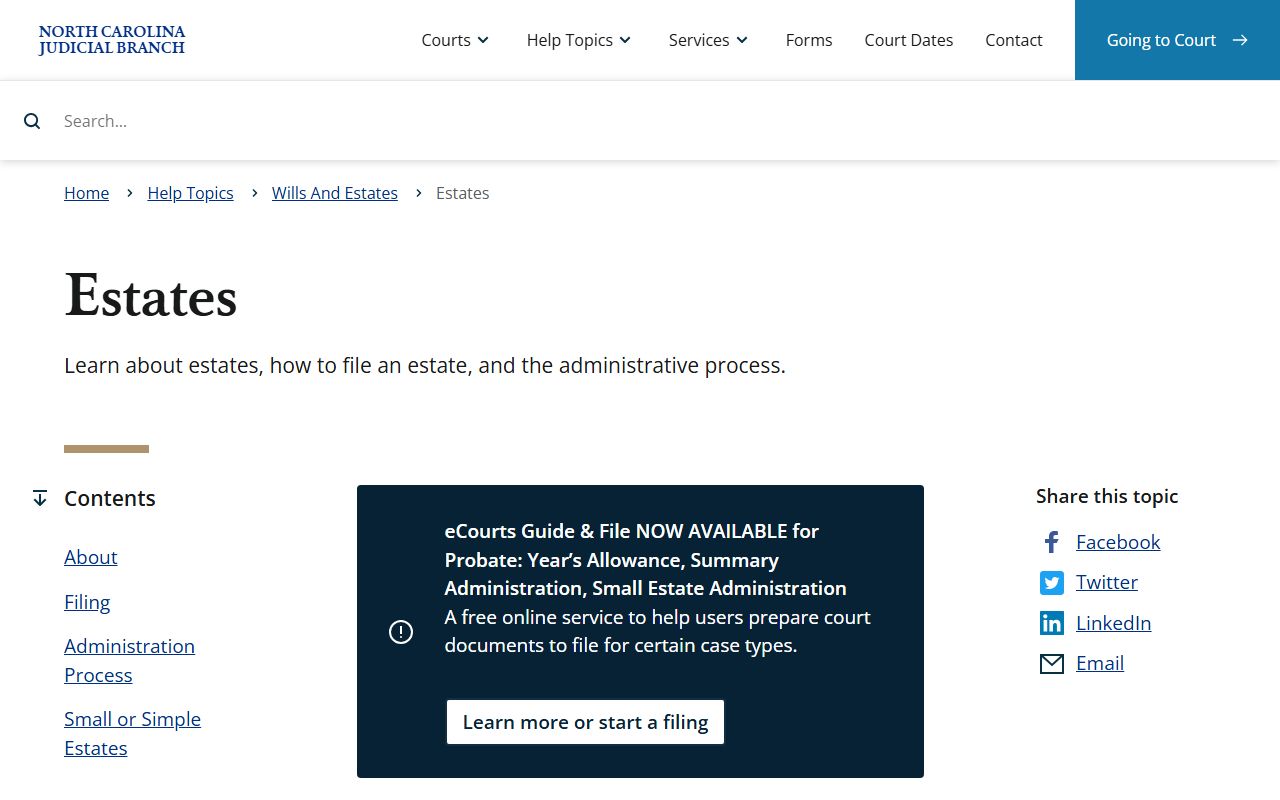
That state estates resource supports the local Rockingham County process because the county clerk follows North Carolina probate procedure.
Rockingham County Probate Fees
The probate fee schedule in the research file comes from the statewide 2026 estates costs chart. Estate fees may include a flat filing amount and a gross-estate fee based on the value of the estate. Copy costs or certification costs should be confirmed with the clerk before ordering because the research file did not provide a page-by-page probate copy fee.
| Probate item | Amount or rule |
|---|---|
| New estate administration or proceeding | $120 total |
| Gross-estate fee | $0.40 per $100 of gross estate |
| Minimum gross-estate fee | $15 per filing |
| Maximum cumulative gross-estate fee | $6,000 |
| Caveat | $200 |
For court payments by mail, Rockingham County payment instructions use money order or certified check only, no cash and no personal checks, payable to Rockingham County Clerk of Superior Court. In-person payment may include cash, credit or debit with a processing fee, money order, or certified check.
Rockingham Estate Administration Process
A probate case usually starts by confirming the correct county, filing the will if one exists, and giving the clerk the required death, asset, and fiduciary information. The clerk or assistant clerk reviews the filing and may issue letters to the personal representative when the requirements are met. The personal representative then gives notices, manages property, files inventory and accounting documents, addresses claims, and distributes property as allowed by law.
Probate flow: Confirm county › File will or application › Clerk review › Letters issued › Notice and inventory › Claims and accountings › Distribution and closing.
Contested wills follow a different path. A caveat challenges the will and is heard by a Superior Court judge. That makes the Clerk of Superior Court the starting point for filing and records, but a judge may decide the dispute when a will contest is properly raised.
For a nonresident estate, the research file notes that administration may be proper where property or assets are located. That fact can matter in Rockingham County when land, accounts, or personal property are in the county even though the decedent lived elsewhere.
What Rockingham Probate Records Show
Rockingham County probate records may include wills, estate applications, inventories, notices, annual and final accountings, orders, fiduciary appointments, letters testamentary, letters of administration, estate-related special proceedings, and caveat filings. Guardianship-adjacent material may appear in the same broad court area, but not every such file is open to the public.
| Record field | What it can show |
|---|---|
| Decedent name | The person whose estate is being administered. |
| File number | The estate or special proceeding identifier used by the clerk. |
| Fiduciary | Executor, administrator, or other person appointed to act. |
| Inventory | Reported estate assets and values filed in the case. |
| Accounting | Annual or final reports on estate activity. |
| Estate value | Gross estate information used for fee and administration purposes. |
Restricted Rockingham Probate Records
Not every probate-adjacent record is fully public. Mental health proceedings and some guardianship or capacity-related records can be restricted. The Portal may show "Probate or Mental Health" as a hearing type, but that does not mean the underlying file is open for inspection. The clerk can identify what can be viewed at a terminal, what requires a paper-file request, and what needs court authority.
The confidentiality rule for juvenile abuse, neglect, and dependency files is especially important when a probate or guardianship question overlaps with family matters. The G.S. 7B-2901 confidentiality statute is one source for those limits.
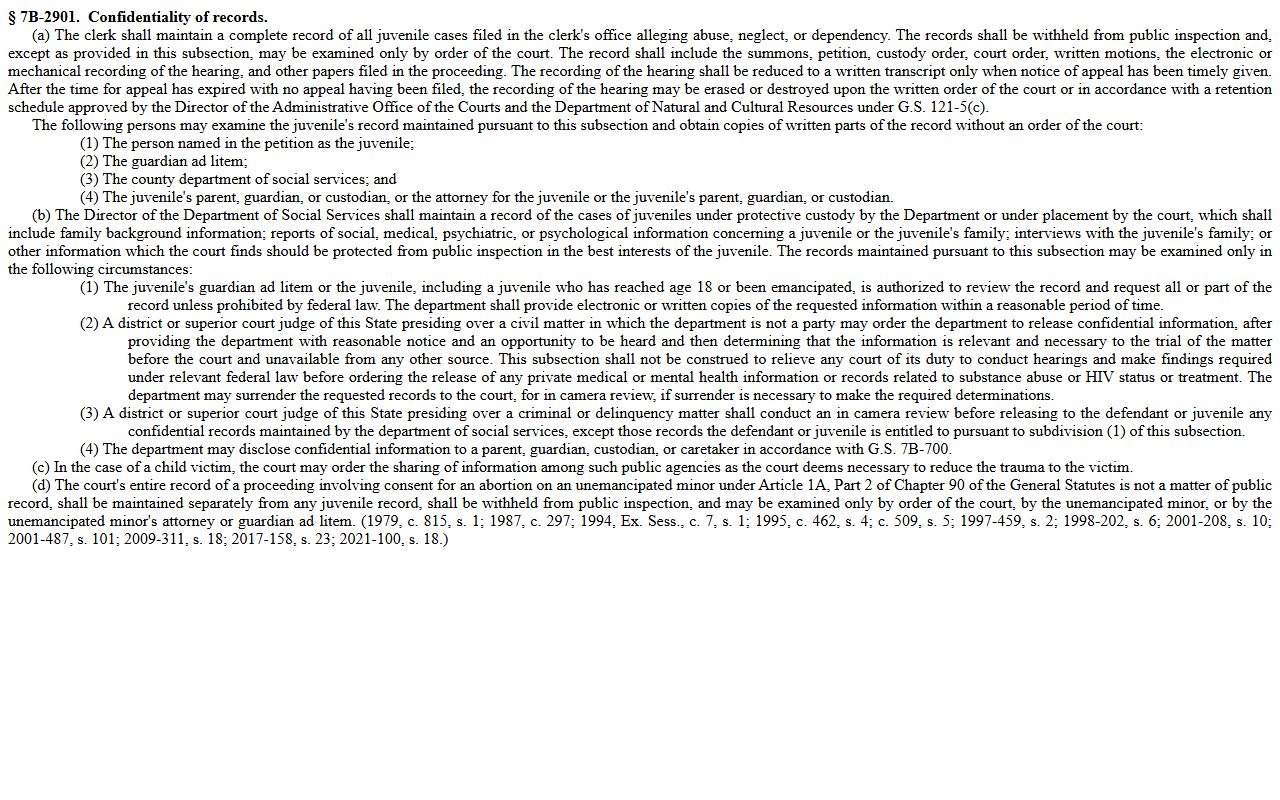
That statutory limit is a reminder that an estate search can be public in part while sensitive family or mental-health material remains outside ordinary inspection.
Note: If a probate record is not visible online, the next step is the clerk's office, not a third-party search site.