
Rockingham County Criminal Court Records
A criminal court record begins once a charge is filed into the court system. In Rockingham County, the Clerk of Superior Court maintains the court case file, docket, and indexes. The file may include the charging document, release conditions, appearance history, motions, orders, plea entries, trial events, disposition, sentence, restitution, costs, and payment status. It is the court's record of prosecution, not a sheriff booking log and not a mugshot database.
District Court and Superior Court both produce Rockingham County criminal court records. District Court handles misdemeanors and infractions without jury trial. Superior Court handles felony criminal cases, jury trial activity, and appeals from District Court misdemeanors and infractions. Magistrates work within District Court for first-stage proceedings such as arrest warrants, bail, initial appearances, and some minor misdemeanor or infraction pleas. The District Attorney prosecutes criminal cases for the State in both trial courts.
Search Rockingham County Criminal Records
The main search channel is Portal Smart Search. Select Rockingham County as the location when the search should be local. Search by record number or case number when possible. For a name search, use last, first, middle, suffix format or the advanced party-name fields. Date of birth, case type, case status, and file-date filters can reduce false matches.
- Open Smart Search in the North Carolina eCourts Portal.
- Filter to Rockingham County if the case should be in the county court file.
- Search by defendant name or case number, then compare names, dates, and court level before relying on a match.
- Open the case to review docket events, charges, plea, disposition, sentence, and financial entries that are publicly visible.
- Use Search Hearings for the next hearing date or courtroom.
- Request certified criminal background checks or certified copies from the Rockingham County Clerk of Superior Court.
The Portal is not the official certified background-check product. Judicial Branch guidance directs certified county criminal record searches through the Clerk of Superior Court using form AOC-CR-314 and the county clerk process. For state custody or supervision status, the NC Department of Adult Correction offender search can help, but it is not a county criminal court file.
Rockingham County Criminal Case Flow
Each stage of a Rockingham County criminal case can leave a court-record trace. The earliest charge may come from an arrest, citation, warrant, magistrate process, information, or indictment. Later entries show whether the defendant appeared, whether counsel was appointed, whether motions were filed, and how the charge ended. The docket may be thin for some events, so the clerk's paper file or certified copy process remains important when exact wording matters.
Case flow: Charges Filed › Arraignment › Pretrial / Motions › Plea or Trial › Disposition › Sentencing
| Stage | What Happens | Record Clue |
|---|---|---|
| Charges filed | The allegation is placed into the court system by citation, warrant, indictment, information, or other charging paper. | Charge text, statute, offense date, case number, and court level. |
| Arraignment | The charge is stated and a plea may be entered under the court process. | Plea entry, appearance, counsel, and next setting. |
| Pretrial / motions | The parties address evidence, release, scheduling, discovery, or legal issues. | Motion titles, orders, continuances, and hearing dates. |
| Plea or trial | The case resolves by plea, trial verdict, dismissal, or other disposition. | Disposition language and judgment entries. |
| Sentencing | The court imposes sentence, costs, restitution, probation, or other terms when there is a conviction. | Sentence fields, money owed, probation terms, and compliance entries. |
Rockingham County Criminal Record Fields
A Rockingham County criminal court record may include more than the final outcome. It can show each charge and its history. It may also show that one arrest led to several charges with different outcomes. A dismissed charge, a reduced charge, a plea, and a sentence can all appear in the same case file. That is why a criminal court record should be read field by field rather than reduced to one label.
| Field | What It Shows |
|---|---|
| Case number | The court identifier used for Portal search, hearings, clerk terminals, and copy requests. |
| Defendant | Name and party role of the person charged in the criminal case. |
| Charge | Offense name, statute, charge class, offense date, and sometimes related warrant or citation details. |
| Court level | District Court for misdemeanors and infractions, or Superior Court for felonies and appeals. |
| Plea | The defendant's formal response, such as guilty or not guilty when shown. |
| Disposition | The outcome of a charge, including guilty, not guilty, dismissed, or other final action. |
| Sentence | Jail, probation, costs, fines, restitution, or other court-ordered terms when applicable. |
| Hearings | Arraignment, pretrial, trial, sentencing, review, or other scheduled court events. |
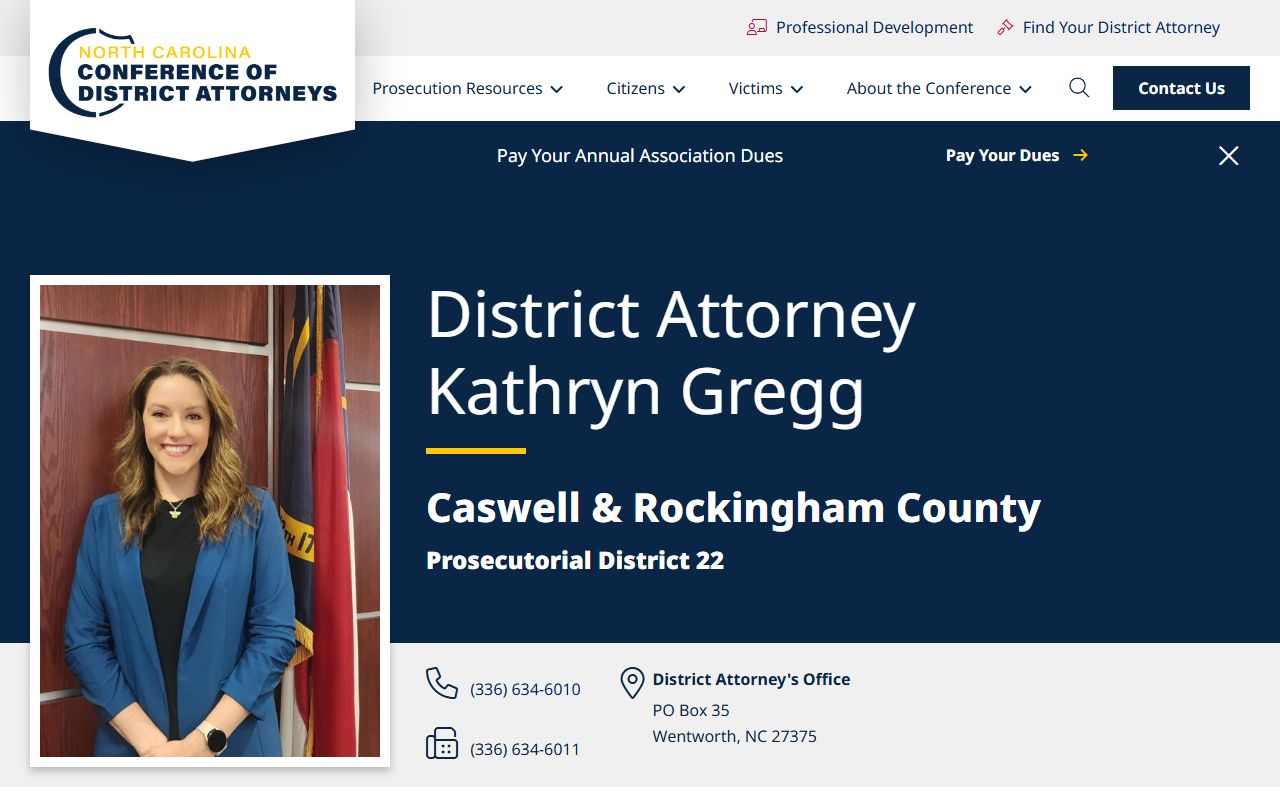
The Prosecutorial District 22 District Attorney page identifies the office that prosecutes Rockingham County criminal cases.
Criminal Charges vs Convictions
A charge is an allegation. A conviction is a final result after a guilty plea, guilty verdict, or other conviction-producing outcome. Rockingham County criminal court records can show charges that were dismissed, reduced, amended, or resolved without conviction. A person reading a court file should check each charge line and its disposition, not only the first listed offense.
| Point | Charge | Conviction |
|---|---|---|
| Meaning | Formal accusation filed into court. | Final responsibility after plea or verdict. |
| When it appears | Early in the criminal case. | After plea, trial, or other qualifying outcome. |
| Can change | May be amended, reduced, dismissed, or superseded. | Can be appealed, corrected, or later affected by expunction if eligible. |
| Best proof | Charging document and docket entries. | Judgment, disposition, and certified court record. |
Read Rockingham Criminal Dispositions
Disposition means the outcome of a charge or case. Common outcomes include guilty, not guilty, dismissal, and other court actions. A sentence is separate from the disposition. Sentencing entries may show jail, probation, fines, court costs, restitution, or other conditions. Financial fields can include payment status, collections, bond, costs, and restitution. Traffic-related criminal matters may also have DMV consequences outside the court file.
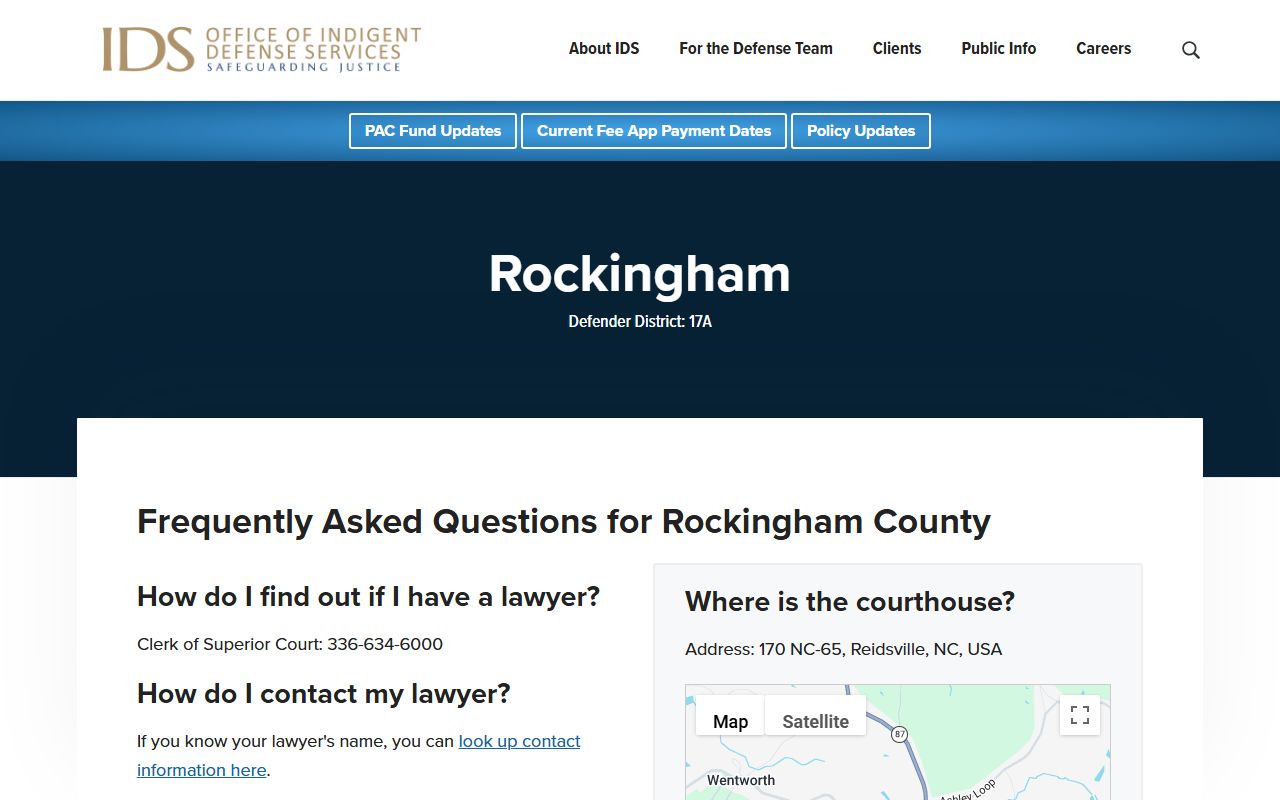
The District Attorney page states that the DA's office represents the State and cannot give charged persons legal advice about charges, insurance points, or driver-license points. Public defender research for Rockingham County points people to the Clerk of Superior Court at 336-634-6000 to find out whether they have a lawyer when they do not know counsel's name. The District 22 appointment plan says the clerk maintains attorney appointment lists and permanent appointment records.
The NC Indigent Defense Services Rockingham page is the researched source for appointed-counsel direction.
Sealed vs Expunged Records
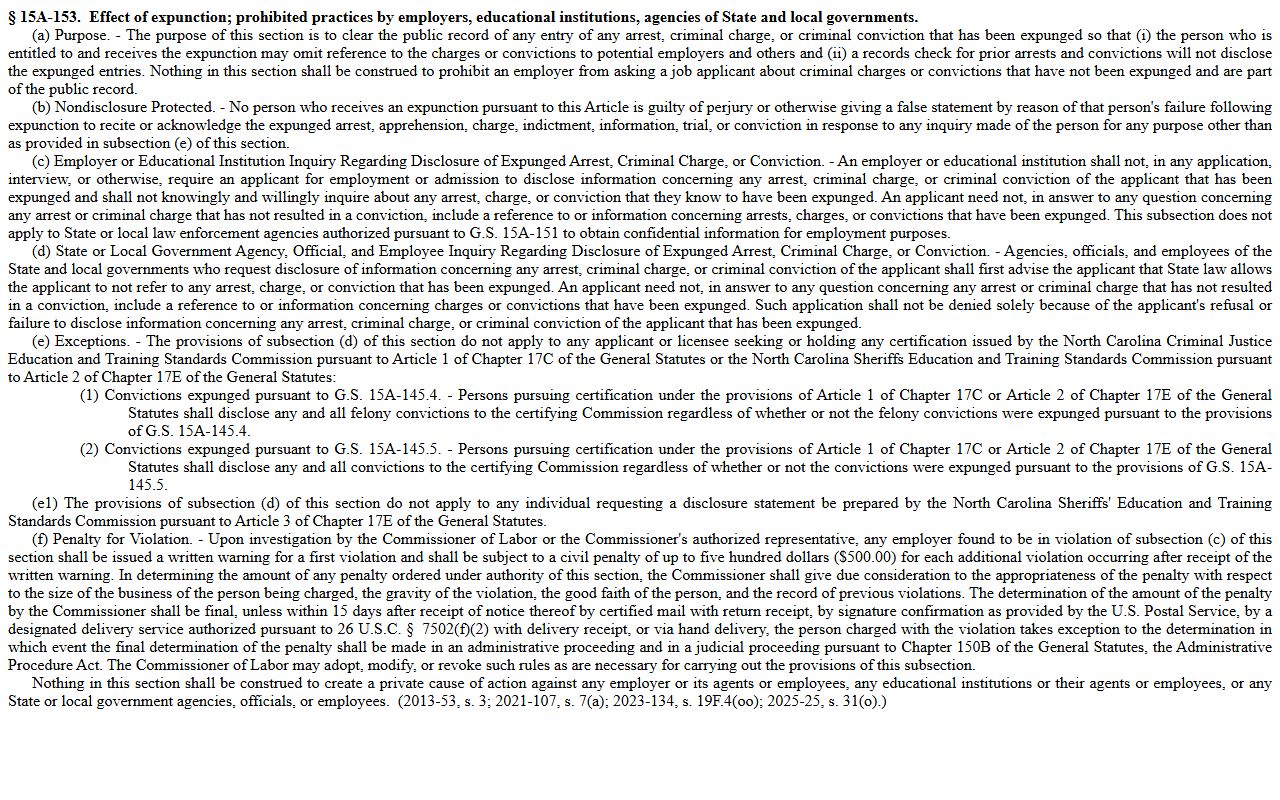
Restricted criminal records require careful wording. A sealed record remains in the court system but is hidden from ordinary public inspection by order or law. An expunged record is treated differently because the statutory purpose is to clear public entries so routine record checks do not disclose the matter. Expunction is legal relief, not a Portal correction.
| Point | Sealed | Expunged |
|---|---|---|
| Visibility | Public access is restricted, but the record may still exist in court systems. | Public entries are cleared as directed by the expunction order. |
| How it happens | By statute or court order restricting inspection. | By petition and order under a qualifying expunction statute. |
| Rockingham examples | Juvenile, adoption, mental health, and other protected files. | Dismissed charges, not-guilty findings, or certain older nonviolent convictions if eligible. |
| Practical route | Ask the clerk about lawful access or court-order requirements. | Use statewide forms and file in the county of the criminal case when eligible. |
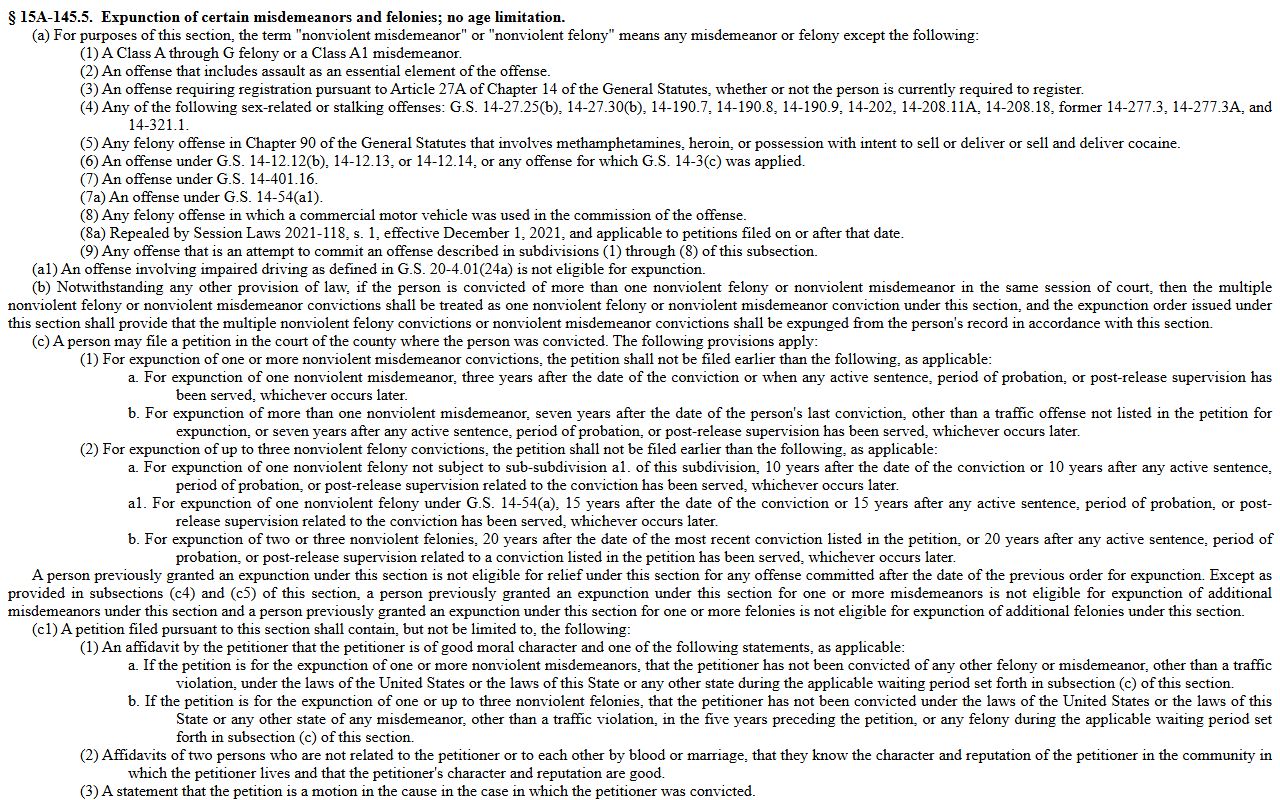
G.S. 15A-145.5 covers expunction of certain nonviolent misdemeanors and felonies.
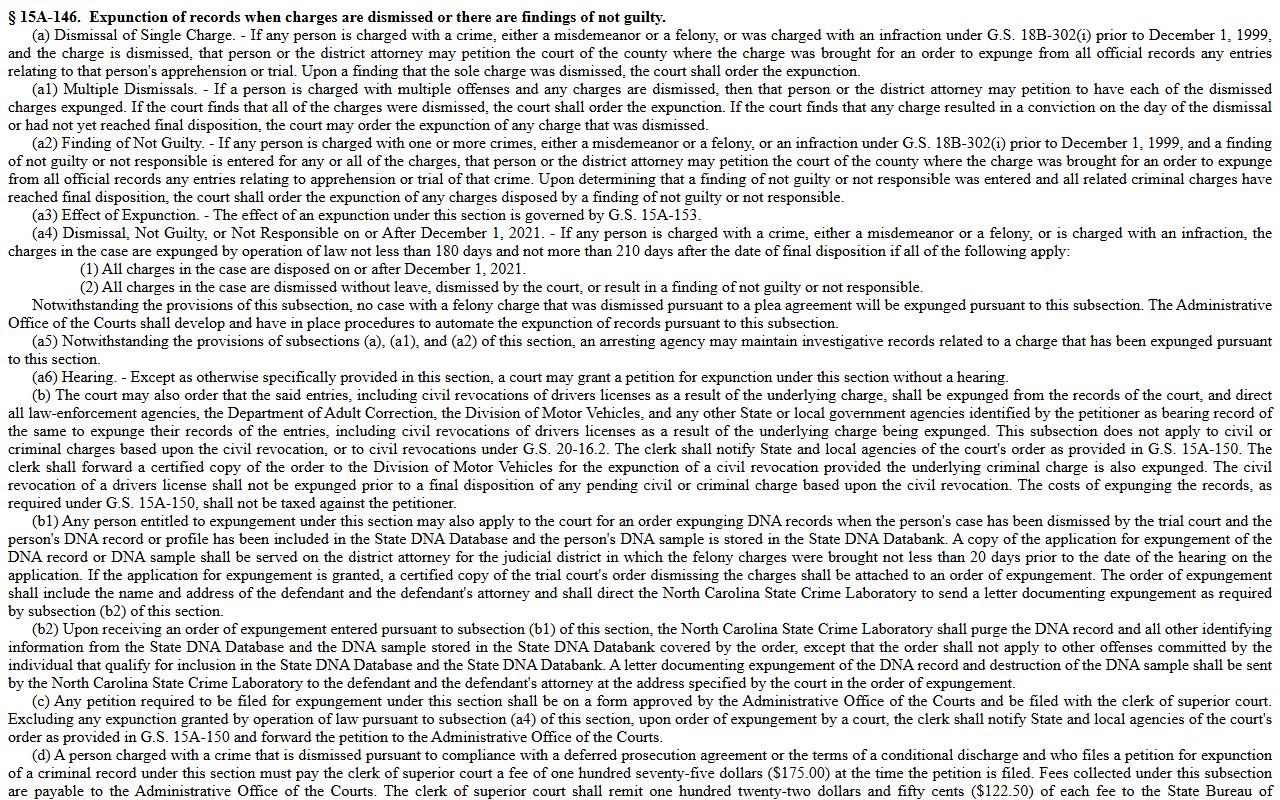
G.S. 15A-146 addresses expunction when charges are dismissed or end in not guilty findings.
G.S. 15A-153 explains the purpose and effect of an expunction order.
Rockingham County Criminal Record Access
G.S. 7A-109 requires clerks to maintain records, files, dockets, and indexes and makes them open for public inspection during regular office hours unless prohibited by law. That is the key authority for clerk-maintained Rockingham County criminal court records. G.S. 132-1.4 is different because it addresses law-enforcement criminal investigation and intelligence records, which are not ordinary public records even though some arrest or incident information may be public.
Key access point: Use Portal and clerk records for criminal case files, and use sheriff records channels for law-enforcement reports.
Certified Criminal Background Checks
For certified single-county criminal record searches, use the Clerk of Superior Court process rather than a casual Portal result. The research identifies AOC-CR-314 and a $25 certified county search fee. Payment notes in the research specify money order or certified check by mail, and credit card, cash, money order, or certified check in person. A certified clerk search is different from a private employment background check and different from browsing a court docket.
Important: Information here is public-record reference material and must not be used for FCRA-regulated screening decisions.
Restricted Rockingham County Criminal Records
Juvenile court records are not ordinary public criminal court records. G.S. 7B-3000 limits access to juvenile delinquency and undisciplined records. Abuse, neglect, and dependency records are also withheld from public inspection under G.S. 7B-2901 except as provided by statute or court order. Ongoing investigative materials, sealed cases, expunged matters, personal identifiers, and some victim or witness information may also be restricted.