
Rockingham County Arrest Records and Court Charges
Rockingham County arrest records describe the law-enforcement side of an event: the arrest, agency involvement, custody or booking context, and limited public arrest information when available. Court charge records describe the allegations filed in court after the arrest, citation, warrant, or magistrate process. Those charges become part of the case record maintained by the Clerk of Superior Court. The District Attorney then prosecutes criminal cases for the State in District Court or Superior Court.
The research did not locate an official Rockingham County public jail roster or booking database on the county or sheriff website. Custody questions route to the Rockingham County Detention Center, VINELink/NC SAVAN notifications, or the broader Rockingham County inmate records path. The court-charge side routes to Portal Smart Search, Search Hearings, and the Clerk of Superior Court. Final pleas, dispositions, and sentences belong in the full Rockingham County criminal court records file.
Find Rockingham County Arrest Records
Start with the question being asked. If the question is whether someone is in county custody, call the Rockingham County Detention Center at 336-634-3236, use NC SAVAN/VINELink for custody notification, or contact the Sheriff's Office. If the question is which charges were filed after arrest, use Portal Smart Search for the case record and Search Hearings for court dates.
- Check whether the need is custody, arrest information, a court charge, or a final criminal case outcome.
- For court charges after arrest, search the eCourts Portal by case number or defendant name and filter to Rockingham County.
- Open the case result and review the charge list, statute, severity, court level, and current status.
- Use Search Hearings to confirm upcoming court dates tied to the charge.
- Use the Clerk of Superior Court for certified copies, older paper files, and certified county criminal background checks.
- Use the Sheriff Records Division or Public Information Officer for law-enforcement records, subject to investigation-record limits.
Law-enforcement and court records have different access rules. G.S. 132-1.4 limits criminal investigation and intelligence records, while G.S. 7A-109 addresses clerk-maintained court records, files, dockets, and indexes. A sheriff report may be restricted even when a related court charge is visible.
Rockingham Charges Filed After Arrest
An arrest does not finish the legal record. It starts a pathway. After arrest or citation, a magistrate or judicial officer may handle first-stage review, bail, and initial appearance issues. The prosecutor screens and prosecutes criminal cases for the State. The charge record begins when a formal allegation is filed into court and assigned a case number. One arrest can lead to one charge, several charges, reduced charges, or charges that are later dismissed.
The charging document matters because it is the formal court paper that states the accusation. Research for Rockingham County identifies indictments in the legal glossary as formal felony charging documents returned by a grand jury. Complaints and informations are also common charging-document concepts, but the exact charging paper depends on offense level and North Carolina procedure. The court record should be checked for the actual document and current charge status.
| Charging Document | Who Uses It | What It Means in the Record |
|---|---|---|
| Complaint | Law enforcement, magistrate process, or prosecutor depending on the case path. | Starts or supports an accusation, often early in misdemeanor or first-stage proceedings. |
| Information | Prosecutor. | A formal prosecutor-filed charge where allowed by procedure. |
| Indictment | Grand jury. | A formal felony charging document that moves a Superior Court prosecution forward. |
Rockingham County Charge Status Table
Charge status changes as a case moves. A defendant may first see a pending charge, then later see an amended charge, a reduced charge, a dismissal, a guilty plea, a not guilty result, or sentence terms. The docket may show some status changes before a final judgment appears. Read each count separately because several charges from the same arrest can have different outcomes.
| Status | What It Means | What to Check Next |
|---|---|---|
| Pending | The charge is open and no final outcome is shown. | Search Hearings for the next court date. |
| Amended | The wording, statute, or charge details changed after filing. | Compare old and new charge entries in the case file. |
| Reduced | The charge level or offense was lowered as part of case handling. | Check plea and judgment fields before treating it as final. |
| Dismissed | The charge ended without conviction on that count. | Review whether dismissal was with or without prejudice when shown. |
| Not guilty | The State did not obtain a conviction on that charge. | Confirm whether other charges in the case had different outcomes. |
| Guilty | A plea or verdict created a conviction. | Read sentence, costs, probation, restitution, and appeal entries. |
Rockingham Charge vs Conviction
A charge is not proof that the person committed the offense. It is the formal allegation being prosecuted. A conviction is the legal result after a guilty plea, guilty verdict, or other conviction-producing outcome. Rockingham County arrest records and court charges may show several allegations, while the criminal court record later shows which charges, if any, became convictions.
| Point | Charge | Conviction |
|---|---|---|
| Record stage | Appears after arrest, citation, warrant, or charging paper. | Appears after plea, trial, or final court action. |
| Meaning | An allegation by the State. | A final responsibility finding. |
| Can change | May be amended, reduced, dropped, or dismissed. | May be appealed or later expunged only if legal criteria are met. |
| Best source | Charging document and docket entries. | Judgment, disposition, and certified court record. |
Rockingham Arrest Records Limits
The Rockingham County Sheriff's Office is led by Sheriff Samuel Scott Page. The main office and Detention Center are at 130 Justice Center Drive, Reidsville, NC 27320. The Sheriff's Office non-emergency number is 336-634-3232, and the Detention Center number is 336-634-3236. The Civil Process and Records Division handles records-copy and civil-process duties, while the Public Information Officer is the channel for public-record and news-media requests identified in the research.
There is no researched county-hosted mugshot or broad arrest-search database to promise. Arrest-related access is a set of channels: detention phone for custody, VINELink for notifications, Sheriff records contacts for law-enforcement records, Portal and the clerk for court charges, and NC DAC for state prisoners, probationers, parolees, and historical state offender records. The NC DAC search does not include county jail information.
Rockingham County Sheriff's Office
130 Justice Center Drive
Reidsville, NC 27320
336-634-3232
Regular office hours Monday-Friday, 8:00 a.m.-5:00 p.m.; services provided 24/7.
Statewide Rockingham Charge Lookups
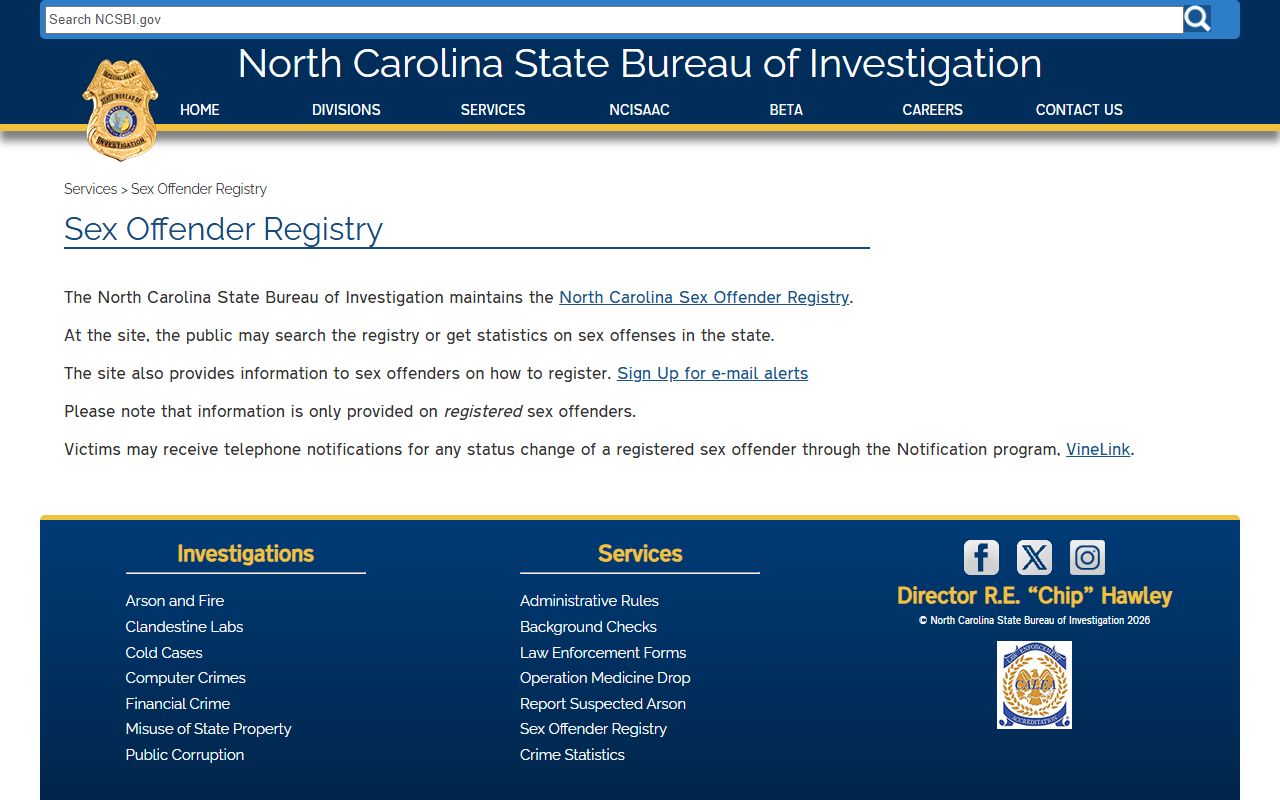
Statewide tools can help, but they answer different questions. NC DAC Offender Public Information Search is for state prisoners, probationers, parolees, and historical state offender records back to 1972. VINELink/NC SAVAN is a custody notification channel and can include county jail inmates, state prisoners, probationers, parolees, and registered sex offenders. The NC SBI Sex Offender Registry is limited to registered sex offenders, not all arrest records or all criminal charges.
The NC SBI Sex Offender Registry is an official state registry source, not a general Rockingham County arrest-record database.
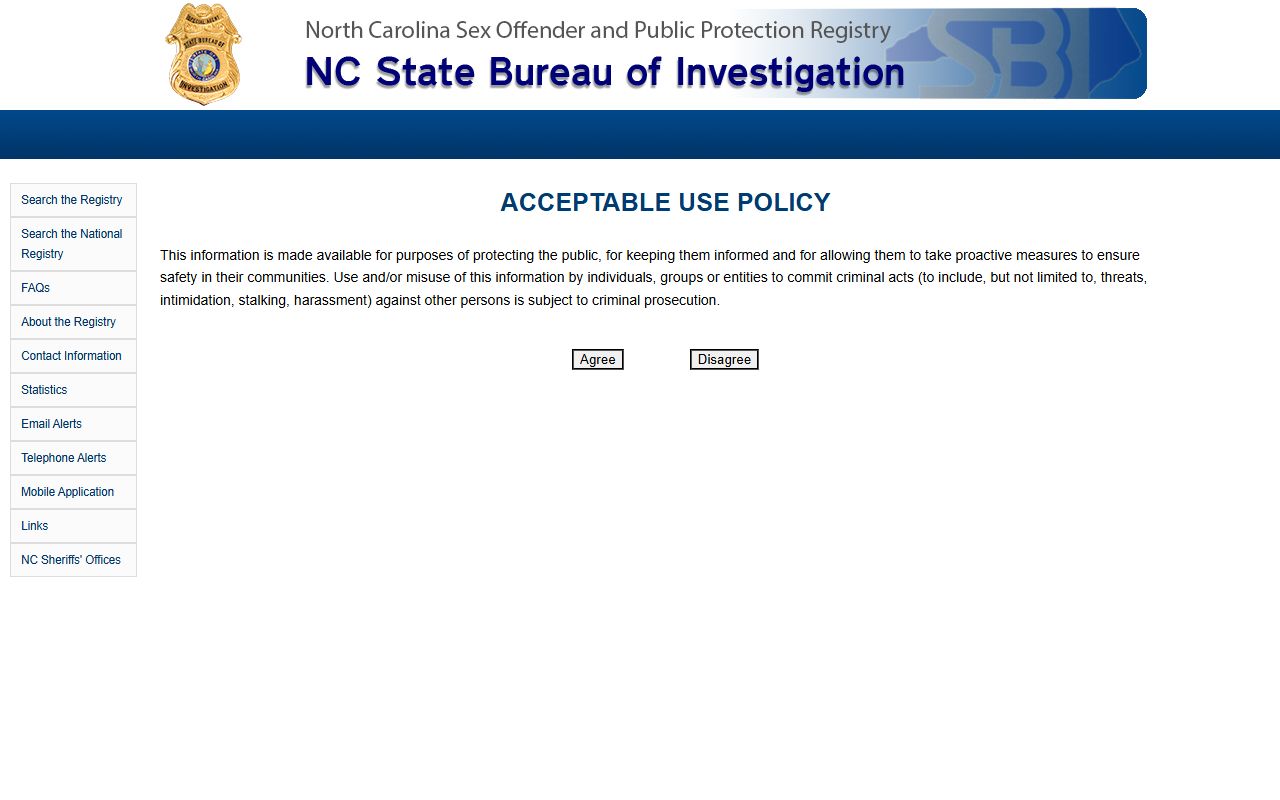
The NCSBI registry description explains the limited purpose of the sex offender registry.
Public Access for Arrest Records
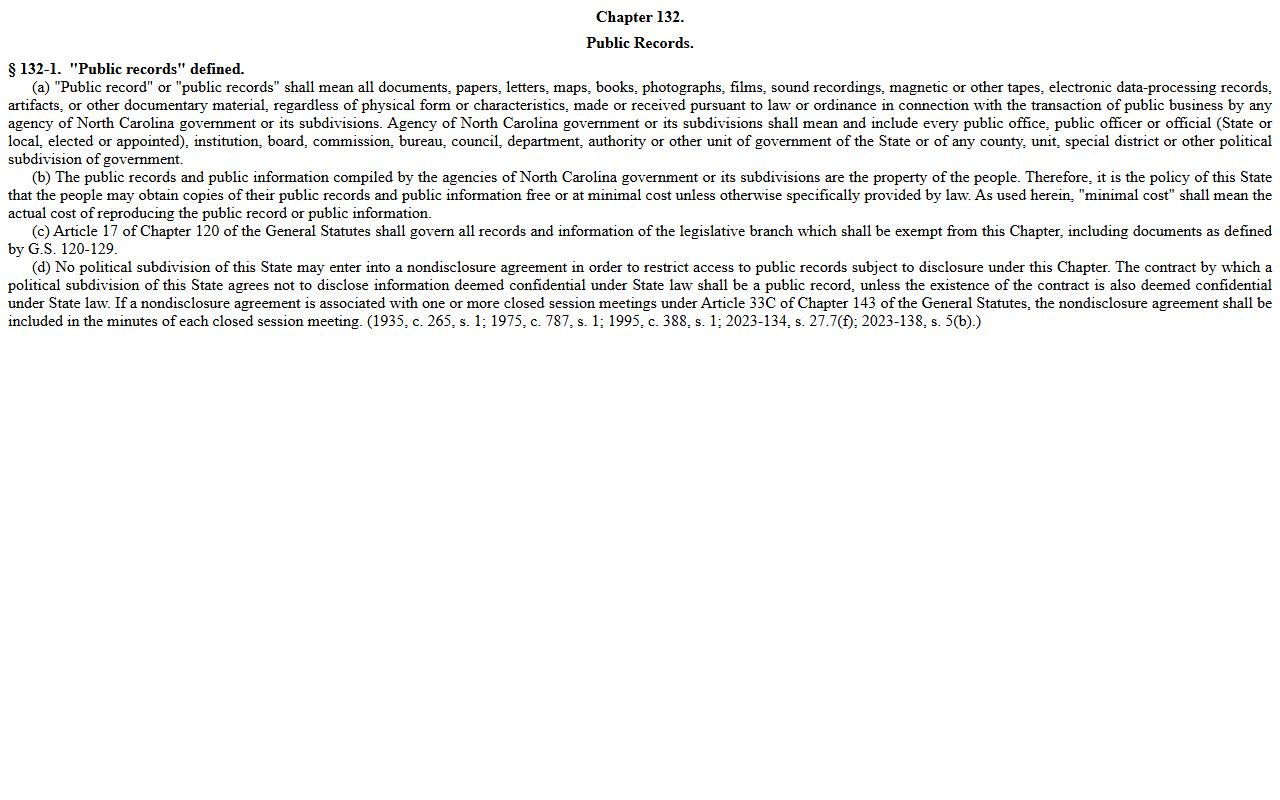
G.S. 132-1 defines North Carolina public records broadly, while court-specific records are governed by clerk access rules such as G.S. 7A-109. Law-enforcement investigation records are different. G.S. 132-1.4 states that criminal investigation and intelligence records are not ordinary public records, though certain arrest or incident information may be public. Body-camera and dashboard-camera recordings also follow a special process under G.S. 132-1.4A.
G.S. 132-1 is the general North Carolina public-records definition used in access discussions.
Expunged Rockingham Court Charges
Dismissed charges and not-guilty findings may support expunction review under G.S. 15A-146. Certain older nonviolent misdemeanor and felony convictions may be reviewed under G.S. 15A-145.5. G.S. 15A-153 describes the purpose of expunction as clearing public record entries so routine checks do not disclose the expunged matter.
| Record Type | Public Access Effect | Rockingham County Route |
|---|---|---|
| Juvenile record | Restricted by juvenile statutes. | Clerk access only for allowed users or by court order. |
| Sealed record | Still exists but is hidden from ordinary public inspection. | Ask the clerk about lawful access procedure. |
| Expunged charge | Public entries are cleared as directed by court order. | File and process the expunction in the county of the criminal case when eligible. |
| Investigation record | Not an ordinary public record under G.S. 132-1.4. | Use sheriff records or PIO channels and expect statutory limits. |
Important: Information here is public-record reference material and must not be used for FCRA-regulated screening decisions.